

How to Learn to Love Yourself (and Others)!
Let’s talk about loving yourself. It’s that time of year when partners and paramours really try to show their affection to their special someone. Alternatively, for the unattached, this time of year can be a reminder of our own isolation (and after 2020, that’s something we don't need more of).
Whatever your Valentine’s Day might look like this year, you already have the perfect date: yourself. Even if you’ve already got a beau, belle, or similar beloved you intend to dote on, dedicating some affection internally can pay off for them as much as for you.
This means more than buying yourself something nice, giving yourself compliments, or going for a spa day. In fact, limiting your idea of self-love to such a surface level interpretation is going to be counterproductive in the long term.
If you’re going to date yourself, you gotta remember that it’s not going to be like a first date. You already know your best stories, after all. It’s more like going on a date night after a lifetime of marriage. The kind of date that reminds you why you fell in love in the first place. The important thing is to find ways to connect with yourself, to show that you care about your own well-being and you can appreciate the things about yourself that no one else will notice.
Self-love is as much about self-acceptance as it is self-care. When you accept yourself for who you are, it makes it easier to focus on others around you. Look at it this way: if we place most of our attention on our mistakes, then we are also failing to appreciate what’s truly important in life: the subtle flashes of beauty that come into existence before blinking away forever, the quiet moments of serenity that exist in between the big ones, or the joy that come from sharing these things with those closest to us.
Too much focus on your flaws can become a compounding issue, too. If you dwell on your negative traits and behaviors (like many of us are prone to do) they can become self-reinforcing. Guilt isn’t a great motivator for change, and instead can lead to fatalistic conclusions about how inevitable our perceived inadequacies can be. And since we have a bias towards negative information, we tend to seek out harsh or critical information over positive information, and if no one provides it, we’ll often provide it ourselves.
This is especially relevant right now on the heels of 2020. Most of us have probably been more than a little critical of ourselves lately, even if we’re not aware of it. We often blame ourselves for things that are outside our control, making it easy to feel like we’ve fallen short of our goals. Which means now more than ever – it’s important to handle yourself, your ambitions, and especially your failures, with a little grace.
So how do we address this? Are there things we can do on our self-love dates that can help make us the best version of ourselves?
Yes! As it turns out, mindfulness is a great way to counter this impulse of self-obsession, so long as we do it correctly. Mindfulness, as a practice, has been a fundamental part of Hinduism and Buddhism for centuries. The practice of quieting the mind and keeping the body still was about stepping outside of one’s regular, self-oriented experiences, and was essential to religious practices that helped emphasize how the individual could improve the greater community. As mindfulness in the Western world has become more popular, it has often been used to amplify our sense of self, instead of helping to diminish it. So, while mindfulness can be extremely effective at reducing this cultural self-obsession, it needs to be approached intentionally to achieve that goal.
Floating is a great way to practice mindfulness and exercise being present. In fact, without any external stimulation, it can be difficult to do anything but live in the moment while your sense of self melts into the water and air around you. Dr. John C. Lilly, the creator of the float tank, used his invention to help develop his own radical personal improvement techniques.
So this Valentine’s Day, do yourself – and your loved ones – a favor. Treat yourself, not just to a pleasant and relaxing experience, but form that meaningful connection with who you are deep down. Go for a float, become one with the Nothingness you’re surrounded in, and come out ready to give everything you’ve got to those who need it. With the way this past year has been, it’s more important than ever to look out for each other, and that starts by looking out for yourself.
Floating Your Way to a Better You

The beginning of a new year is often a time for making plans and inspiring change, but 2021 has just started and already it has a lot of expectations being placed upon it. With the pandemic, 2020 felt like a global “timeout” for a lot of people, so we’ve all had to push things off and are banking on this year being an opportunity for new beginnings.
In the spirit of pursuing positive change, here’s a collection of some lesser known benefits of floating for making changes in your life.
SLEEP
This one feels like cheating a little bit because it seems so obvious, but a better night’s sleep is actually one of the best ways to set yourself up for success when trying to create a new routine or build better habits. Maybe the better habit you’re trying to build is around sleep, in which case, hey – two birds, one stone!
Improving sleep is consistently one of the most reported benefits from float studies (right below reduced stress and anxiety).
IMPROVED LEARNING AND TRAINING
One of the really interesting ways floating impacts our minds is through our emotional state, which can, in turn, impact how we retain information. People experiencing negative emotions tend to have trouble remembering positive experiences and, even with neutral information, what they recall tends to be less specific.
Since floating is so good at reducing stress and anxiety, it’s probably no surprise that in clinical trials researchers found that memory recollection in people who floated was more vivid and intense compared to control groups.
Floating also helps with training skills as well. In high performing athletes who trained for precision, floating helped improve performance beyond their regular training plateau. Whether it was archery, marksmanship, or endurance, floating made it possible for them to do better more consistently.
ADDICTION
Anyone who’s recovered from addiction can tell you that isolating yourself from whatever is triggering your impulses can be extremely helpful, even for relatively short periods of time since it removes you from whatever the motivation is to break apart the impulse to relapse.
There was some excellent research done about sensory isolation to combat addiction of nicotine, alcohol, and narcotics. The studies showed that prolonged isolation is really great at dealing with withdrawal symptoms as well, lessening their intensity and making them more manageable. It’s been so effective that there are certain recovery programs that have begun integrating floating into their treatment to help lower the risk of relapse in drug addiction.
In addition to the research, there are several personal stories that have attributed floating to helping with addiction. John Lennon, as shared in Lives of John Lennon by Albert Goldman, famously used floating to help him overcome his heroin addiction.
---
No matter what your New Year’s Resolution may be, floating can be a really helpful tool in getting there. And even if you’re not sure what goals you’d like to focus on in the New Year, a float tank can be a great place to think about it.
Salinity And Serenity
Salinity and Serenity: Floating Your Way to Inner Peace

Serenity. That sounds nice, doesn’t it?
With 2020 not letting up as it careens to a close, serenity can seem like nothing but an out-of-reach pipedream – both in our own lives and in the world as a whole. It’s difficult to relax and focus on the present when so much of even the immediate future is uncertain. In times like these, though, fostering that sense of mindfulness and serenity is perhaps one of the most important things that we can do.
With so much of the chaos around us being outside of our control, it’s especially important to focus on those areas where we can have the most positive impact. As always, one of the most immediate places we can make the largest difference is in taking better care of ourselves. Even more precisely, cultivating our own mental health – our own serenity – is a very worthwhile endeavor.
When discussing mental health it can be tempting to talk about the negative symptoms of a certain condition, such as how stress, anxiety, or fatigue aggravate mental health issues. Rarely do we talk about improvements to mental health in strictly positive ways without comparing them to an existing negative. Something needs to be wrong in order for us to “fix” it.
This isn’t just a result of our culture: it’s baked into our psychiatric science and treatment as well. In the DSM-5, the reference manual for diagnosing mental disorders, a huge number of the disorders’ descriptions end with, “...and interfere with daily life.” What if nothing is wrong? Or, if something is wrong, what if it’s not bad enough to significantly interfere with your daily life?
It can be hard to remember that mental health isn’t an on/off switch. It’s a gradient, and even when you’re not suffering you still always have room to make things better for yourself.
This is one of the things that floating does best. It improves your mental wellness and sense of personal satisfaction. It improves your serenity.
Now, when we say serenity, you probably have some kind of mental image of meditation, or relaxation, or of Joss Whedon’s Firefly. All totally valid, but we’re really only focusing on the first two here. In addition to its cultural meaning, serenity is an actual scientific term. It’s something psychologists measure alongside other mental wellness markers – essentially it gauges how well we practice being present, how ready we are to offer forgiveness, as well as how content we feel with ourselves despite negativity in our lives.
Serenity also happens to be one of the many mental health factors that has been studied in recent floatation research. In 2018, Dr. Justin Feinstein and his team at LIBR were able to demonstrate the effect a single 60-minute float had on serenity, and we don’t think we’re overstating it by saying the results were impressive:

For anxious participants, serenity skyrocketed post-float, above even the baseline for non-anxious participants. In the non-anxious population, though, serenity still increased a significant amount, illustrating very nicely this idea of mental health as a gradient.
Perhaps even more impressively, when we look at the data from all 50 participants in the study, every single one saw an increase in serenity after floating. Nearly ¼ of the participants maxed out the scale post-float. The graph for all participants’ data shows just how impressive this is. The red bar indicates how serene they felt before the float session, and the blue shows the (often quite drastic) improvement.

You can see a presentation on the full results from this study here, and read the actual research article here. Serenity was just one of many things studied, and the same sorts of impact are shown on decreasing things like anxiety and muscle tension while increasing relaxation and energy levels.
As a little teaser, here is a chart showing the negative and positive mental health traits impacted by a single float:

This year, and this holiday season, may be insane, but we as humans experiencing it can choose to make an impact where we can: in self-care. Whether that’s meditation, exercise, sitting by a fire sipping hot chocolate, or (as we are quick to encourage) hopping into a float tank.
Serenity isn’t as far away as you may think, but it does require you to set the stage for it by setting aside time for yourself.
Floating and Creativity: Finding Inspiration in the Darkness

We tend to think of creativity as synonymous with expression (writing, music, art, etc.), but creativity is also how we respond to unusual situations, how to approach old problems in new ways, as well as how we share this information in a way that is both entertaining and informative.
Creativity is such a fundamental part of what it means to be human that we often take it for granted. Change is one of the defining characteristics of the human experience, and being able to adapt to it and think laterally when problems arise has shaped our history in both big and small ways. Innovations like flight, the internet, and homogenized milk were all expressions of creativity. It’s something we use daily, even if we’re not thinking about it: developing a sense of style, finding ways to automate your work, or even creating a unique Zoom background for your digital meetings are more everyday examples of how creativity influences our lives.
Floating has such an obvious effect on creativity, that it’s hard to find a float center that doesn’t celebrate it in some way, whether through float-inspired artwork on display, post-float journals for zen’d out floaters to express themselves in, or album releases of float-inspired music.
So what is the connection between floating and creativity? And how do you research something as nebulous and ubiquitous as creativity, anyhow?
For a long time, it was widely believed to be difficult (if not impossible) to manufacture creativity. Beautiful muses could apparently help, but it was still something intangible and unreliable. Either inspiration strikes or… it doesn’t.
For as long as written language has existed, we’ve struggled with how to make inspiration strike. The I Ching, one of the oldest texts in existence, is fundamentally about how to foster creativity to encourage change – in yourself and the rest of your life.
Despite being written thousands of years ago, many of the teachings are frighteningly contemporary. The text itself is non-linear and there’s a lot of debate about specific word choice in translation, which makes it difficult to quote out of context, but one of the fundamental principles it states clearly and repeatedly is a strong comparison between times of quiet rest and solitude and nurturing the mentality necessary to adapt to great change.
Saying that we should avoid distraction and overstimulation to foster creativity is not a new idea, as it turns out. In fact, it may be one of the oldest ones we’ve ever had!
Synthesizing an abstract and analytical approach
More recently, academia has taken a more methodical approach to looking at creativity. In 1954, poet and academic Brewster Ghiselin compiled a symposium, The Creative Process, from some of history’s creative heavy hitters, including such greats as Einstein, Van Gogh, and Mozart to name a few.
Ghiselin took these observations and attempted to make sense of the common threads that give spark to creativity. In an anecdote from Henri Poincaré about inspiration, Ghiselin was struck with the process that led to one of his most important discoveries in mathematics: “he lay unable to sleep and became a spectator of some ordinarily hidden aspects of his own spontaneous creative activity.” Ghiselin saw this as a fundamental part of unlocking creative potential, “though Poincaré was conscious, he did not assume direction of his creative activity at the stage described, and as it seems to have been a sort of activity not susceptible of conscious control, apparently he could not have done so.” In short, he’s making the same observation as the I Ching: when we seek out stillness, our minds work out the rest of the hard stuff.
But philosophy and essays are not research, and at the time, scientists didn’t really know how to study something ] as abstract as creativity. Psychology was still a very young and developing field, and it would be a few decades before anyone would publish peer-reviewed research on how floating impacts creativity and problem solving.
In 1987, that’s exactly what happened at the University of British Columbia. The researchers there found that psychology professors came up with more ideas after floating, and that those ideas were generally more creative, with every participant except for one finding their floats to have an extremely positive impact on their ability to create. These results were later verified by the same researchers and replicated by other scientists at the University of Vermont. The Vermont study also found that people who floated were less likely to feel fatigued or frustrated by complicated problems.
Sweden’s Karlstadt University, one of the leading float research institutes in the world, saw this research and began attempting to replicate the results. Between 1998 and 2003, they published four separate articles on the benefits of floating on creativity, in addition to the other research they were doing. They found that despite taking longer to to solve problems, the subjects who floated all found more creative solutions, that it could help with creativity and literacy skills for those who use english as a second language, that floating increased originality, but lowered deductive reasoning, and finally that floating could potentially be a safe way to access altered states of consciousness, which could lead to increased optimism and creativity.
What makes this research so interesting is that so many of these studies took place before smartphones existed. More so now than ever, we live in a distracted, interconnected world, and the issue of “screentime” dominating our daily lives is an issue at the forefront of our society.
It doesn’t take a team of dedicated researchers with decades of studies to understand why floating stimulates creativity, though. It intuitively makes sense. Unplugging and centering yourself in quiet solitude is naturally going to help your mental faculties. Removing all distractions, even gravity, is a great way to rewire your mind and channel your creative energy into the places it needs to go, not just where the world takes it.
What Do High Level Athletes Know About Floating?

Here’s a sports trivia question for all our athletically-inclined readers:
What do the Dallas Cowboys, the Golden State Warriors, the Chicago Cubs, The Manchester United Football Club, and Michael Phelps all have in common?
You might see this lineup and think “well, the ‘92 Dallas Cowboys won the Superbowl that year, the Golden State Warriors won the NBA Finals in ‘14, the Cubs made history when they won the 2016 World Series, Manchester United is one of the most hono(u)red Football Clubs in the world, and Michael Phelps has won more gold medals than any other Olympian in history! They’re all winners!”
But that’s not all they have in common: they also all used float tanks.
They weren’t alone, either: the New England Patriots, UFC Hall of Famer Royce Gracie, the Chicago Bulls, Olympic Gymnast Aly Raisman, the Philadelphia Eagles, Olympic Gold Medalist Carl Lewis, The Detroit Pistons, as well as literally hundreds of other professional athletes have incorporated floating into their training and recovery programs throughout the years.
Floating is one of the best kept secrets in high-performing athletes and there’s some interesting research that helps explain why.
Raising the Performance Ceiling
If someone told you that laying in the dark on a bed of saltwater could give you superhuman strength or speed, would you believe them? It may not be as far-fetched as it sounds.
One study found that high-level athletes who have plateaued – those who don’t see any additional benefits from more training – would see an improvement in performance after floating in conjunction with visualization techniques, even without additional training.
Put another way, athletes were able to increase their peak performance just by floating before competition. A followup study not only confirmed this result but also showed that floating multiple times between games led to significant improvements over a single float! This demonstrates something that most floaters already know: the more you float, the better it is for you.
Improved Precision
Beyond general athletic performance, a few studies looked at more specific benefits of floating in athletes.
Several studies tested how floating affects marksmanship. All 3 studies had a float group and a control group, with participants from all skill levels.
In the rifle marksmanship study 75% had a statistically significant increase in accuracy pre- to post-float with no such increase was found in the control group (relaxation without floating). A similar effect was found in the darts study, with 80% of participants seeing an improvement. It’s worth noting that in both studies, these improvements were seen regardless of skill level.
While the archery study didn’t see any significant increase in accuracy, it did show that the float-group had more consistent scores than the non-float group, something that the other two studies found as well.
Reduced Recovery Time
While the benefits described above could be explained as a side effect of stress reduction, there’s more to the story of the impact on floating in physical performance, certainly not enough to explain why floating has been so popular among high-level athletes.
Building off of earlier research, scientists in recent years have started using biometrics to see what’s happening to athletes who float on a physiological level. A 2013 study looked at the effect floating has on lactic acid build-up.
Lactic acid is associated with that post-workout feeling of tightness in your muscles that causes your body to stiffen and get sore. Professional athletes are always looking for new ways to reduce the amount it builds up during a workout to maximize performance.
What they found was that floating after exercise showed a 62% reduction in lactic acid buildup on average compared to the control group. Participants also reported feeling less pain and were back at peak performance sooner.
A followup study in 2016 was able to replicate this effect with a larger sample size over 9 different sports. Not only were they able to replicate the lactic acid reduction, they also found a significant reduction in muscle soreness and improved mood and reduced fatigue in those that floated.
Looking at the Whole Picture
When you take all of these effects together, you can start to see why floating has been one of the best kept secrets of successful athletes. When you take into consideration the stress reduction benefits as well, you can see how floating might help them be at the top of their mental game in addition to their professional one.
The best part about all of this? Floating is helpful for athletes at every level. You don’t need to be an Olympian to see the benefits of floating in your exercise. It can be a nice way to cool down after a jog or help you recover after playing in a local league game on the weekends.
Football:
Minnesota Vikings
Houston Texans
New England Patriots
Seattle Seahawks
Denver Broncos
Dallas Cowboy
Cincinnati Bengals
Philadelphia Eagles
Buffalo Bills
Baseball:
Chicago Cubs
Minnesota Twins
St. Louis Cardinals
Arizona Diamondbacks
Philadelphia Phillies
San Francisco Giants
LA Dodgers
Houston Astros
Basketball:
Chicago Bulls
NY Nicks
NY Nets
Washington Wizards
Detroit Pistons
Golden State Warriors
Atlanta hawks
OKC Thunder
Hockey:
Philadelphia Flyers
Chicago Blackhawks
Misc:
Manchester United
All Blacks …New Zealand Rugby
Crusaders …New Zealand Rugby
Carleton Football club Australian football
Taft Rugby
Team GB Rowers
Individual athletes:
Aly Raisman
Michael Phelps
Stephen Curry
Hunter Pence
J.J. watt
Cody Garbrandt
Harrison Barnes
Carl Lewis
Phillips Idowu
Wayne Rooney
Henry Cejudo
Razak Al Hassan
Mohammed Usman
James Vick
Mark and Montana DeLaRosa
Floating, Meditation, and Mindfulness - Adding Tricks To Your Mental Toolbelt

Floating removes you from the outside world and gives your mind the freedom to wander wherever it wants to go. When you float, you don’t have anything you need to do.
There’s nothing you need to work on.
You have a space where you can lie down, removed from the pressure of thinking, discussing, or participating in anything at all. It’s an environment that exists almost completely opposite our current plugged-in, sensory-driven way of life.
In a float tank, you have the opportunity to be more mindful than pretty much any other environment in the world.
What does it mean to be “mindful”?
Make a mental note of how you’re feeling right now. Now, use the next 30 seconds to try this – you can have your eyes open or closed:
Clear your mind. Take a deep breath. Deep exhale.
Another breath. Flex your toes and fingers. Exhale. Breathe normally.
Relax your shoulders and your jaw.
If you chose to close your eyes, open them slowly.
How do you feel? How does that compare to how you felt beforehand? Odds are you feel better after spending 30 seconds focusing on your breath and where you hold tension. Bringing passive awareness to your state of being reconnects your body and mind and can help remove the physiological effects from the outside world, which can often be stressful.
This, more or less, is mindfulness (although it’s definitely more complicated than this).
It can be summed up as paying attention to the present moment in a non-judgmental manner. It’s one of the fundamental ideas behind much of Buddhist meditation. It seems absurdly simple, especially when looking at the many benefits attributed to it.
For the past thirty years or so, researchers have been looking more closely into what mindfulness is and why it works so well for us. There are two main components to mindfulness exercises from a clinical perspective: self-regulation of attention and orientation to experience. It can sound a bit technical, but they are pretty easy to understand concepts when they’re broken down.
Self-Regulation of Attention
Much of mindfulness relies on the passive observation of where your attention is focused and maintaining that attention on the present moment. When you pay attention to your breathing and what your body is doing, you’re keeping your mind focused on only things that exist and are affecting you in the current moment.
Many people assume that in order to do mindfulness “successfully”, you have to prevent yourself from thinking, but that isn’t true. Being mindful simply means you acknowledge whatever thoughts arise before returning your focus to your state of being in the present moment. It can be surprisingly difficult to maintain this over long periods of time, but maintaining a lack of attention to your thoughts allows them to flow freely and places you firmly in the present.
Orientation to Experience
This idea is a little more nebulous, but it builds off of what was already discussed. This is what you’d think of as “being present” in mindfulness practices.
All those experiences that you feel and the thoughts you have occur and you pass them by. You don’t pass judgement on any thoughts or feelings. You don’t assign guilt to what you’re doing or not doing. Everything that occurs to you is equally worthy of your curiosity and consideration.
You orient yourself towards your experiences and become a passive observer to your mental processes rather than an active participant. You’re open to whatever occurs and you’re better positioned to accept it than you would be otherwise.

What does this do for me?
If you look at these two elements of mindfulness, it might seem like a nice way to relax or a good way to organize your thoughts – it can be difficult to imagine just how impactful it is to place yourself in this state of being present. While it certainly isn’t a magic spell that can erase all the negativity you feel.
When you make mindfulness a habit, it starts to change how you live your life in subtle ways. It makes it easier to take control over your own behavior and moods, which in turn helps you focus on how you’re feeling. With proper focus, it can also help you build coping mechanisms for day-to-day stress, reducing the negative impact it can have on your life. This can help reduce the severity of stress-related anxiety disorders and depression, as well as manage chronic pain, improve creativity, and generally improve a person’s quality of life.
How Floating Dissolves Stress

Even without the existential malaise of living through global crisis, our modern way of life tends to exert a lot of pressure on most people. As mental health research evolves, it’s become apparent that what we call “stress” can actually cause a lot of health problems; not just physical problems like heart disease and high blood pressure (although those are certainly significant), but also mental health issues like PTSD, depression, and eating disorders.
Finding ways to recharge is more important than it’s ever been, but there’s a healthy amount of skepticism about alternative wellness practices, with floating being no exception. So how can we be sure floating is as helpful as it claims to be?
Simple. We follow the science!

There was a recent Tedx Talk by a well known scientist, Dr. Justin Feinstein from the Laureate Institute of Brain Research, who shared some of his research findings about the effects of floating on stress. What’s so incredible about this research is that every single person who participated in it experienced some amount of stress relief, with most people experiencing a significant reduction in their stress levels that lasted for more than a full 24 hours after a single session.
24 hours is a pretty long time for any given treatment to work. Just think: if there was a pill that would make you virtually stress free for a whole day, who wouldn’t want that? While floating isn’t quite as easy as taking a pill, the benefits of it seem even more significant than most available anti-anxiety treatments. Not to mention, you don’t have to worry about things like interactions with other medications or other negative contraindications.
Dr. Feinstein has been studying people with stress-related illnesses like PTSD, depression, and anxiety, and what he’s finding is that people who have the highest levels of stress before floating experience the largest benefit. Basically, everyone who floated returned to a baseline level of relief so no matter how anxious you are, floating is going to bring you down to a similar level of relaxation as everyone else.
This is all really fascinating, but how does it work? Is it really as simple as sitting in the dark and not thinking about anything for an hour or more? It looks like it.
Floating allows our minds and bodies to slow down, gives us the ability to recharge more quickly, and puts our brains in a more dreamlike state. The solitude of a float, where we know we can’t be bothered by the outside world, is a massive destresser that is surprisingly difficult to find elsewhere.
To help illustrate this point, let’s move from science to history. There’s a psychologist named Peter Suedfeld who did a lot of groundbreaking research into “sensory deprivation” back in the 60s and 70s. Dr. Suedfeld’s work didn’t focus on float tanks (at first), but instead involved placing people in completely dark rooms in total isolation for 24 hours or more at a time. He called this process REST (Restricted Environment Stimulation Therapy).
At the time, psychologists were very misinformed about sensory deprivation -- they essentially thought it was torture. Previous research was incomplete, and the methods that researchers used were suspect at best. They would prime subjects to bad outcomes before the experiment even began; focussing on negative side effects in their introduction. The experiments themselves involved exposure to constant harsh lights and loud noises -- which doesn’t exactly sound like sensory deprivation, does it? Dr. Suedfeld thought that it was possible to take a different approach and get a positive effect. And he was right.
Dr. Suedfeld focused on keeping subjects at ease and making the process simple for anyone participating. What his research found was that instead of feeling like it was torture, people actually enjoyed the sensory deprivation experience! The subjects felt it was relaxing and beneficial. One participant even tried to sneak in multiple times under different names to repeat the experience!
Over the years, he found out that there was a positive potential benefit to REST in many areas: addiction treatment, helping people with autism, enhancing creativity, and, of course, reducing stress. It shouldn’t be surprising, then, that there are entire groups of people who choose to live in total darkness for months at a time and say they find it peaceful.

This research was foundational for the future of float tanks, and helped to key in early on to the benefits of floating and reducing stress. In fact, back in the 80s and 90s, scientists started calling it “Floatation REST” and referring to the dark rooms that Dr. Suedfeld used as “Chamber REST”.
Since then, scientific understanding of sensory reduced environments has only grown, and in the age of information, the benefits of isolation run in stark contrast to how we live our day-to-day lives. Luckily, you don’t need to spend a day in the dark to experience the benefits -- we’re learning now that Float REST can provide similar benefits in just a single session (though of course, the longer you can float, the better).
In his talk, Dr. Feinstein notes how we aren’t designed to be constantly plugged in and looking at screens all day, listening to cars driving by, or dealing with the glare of fluorescent lights non-stop. Neither were we supposed to be constantly thinking about what we have to do next, fit a full 8 hour workday on top of raising families, going to school, and being a part of our communities.
Even when we enjoy these things, they can wear us out and add to the stress of our daily lives. Taking a break can give us a reset button, and floating has been proven to be one of the most effective ways to do that.
Whoop Experiment
So, last week I conducted an experiment on myself. Using my Whoop performance monitor, I wanted to see the effect that floating 5 days in a row would have on my sleep and recovery. In the photos below, you can see my sleep quality and recovery leading up to the floats. Not very good, is it?
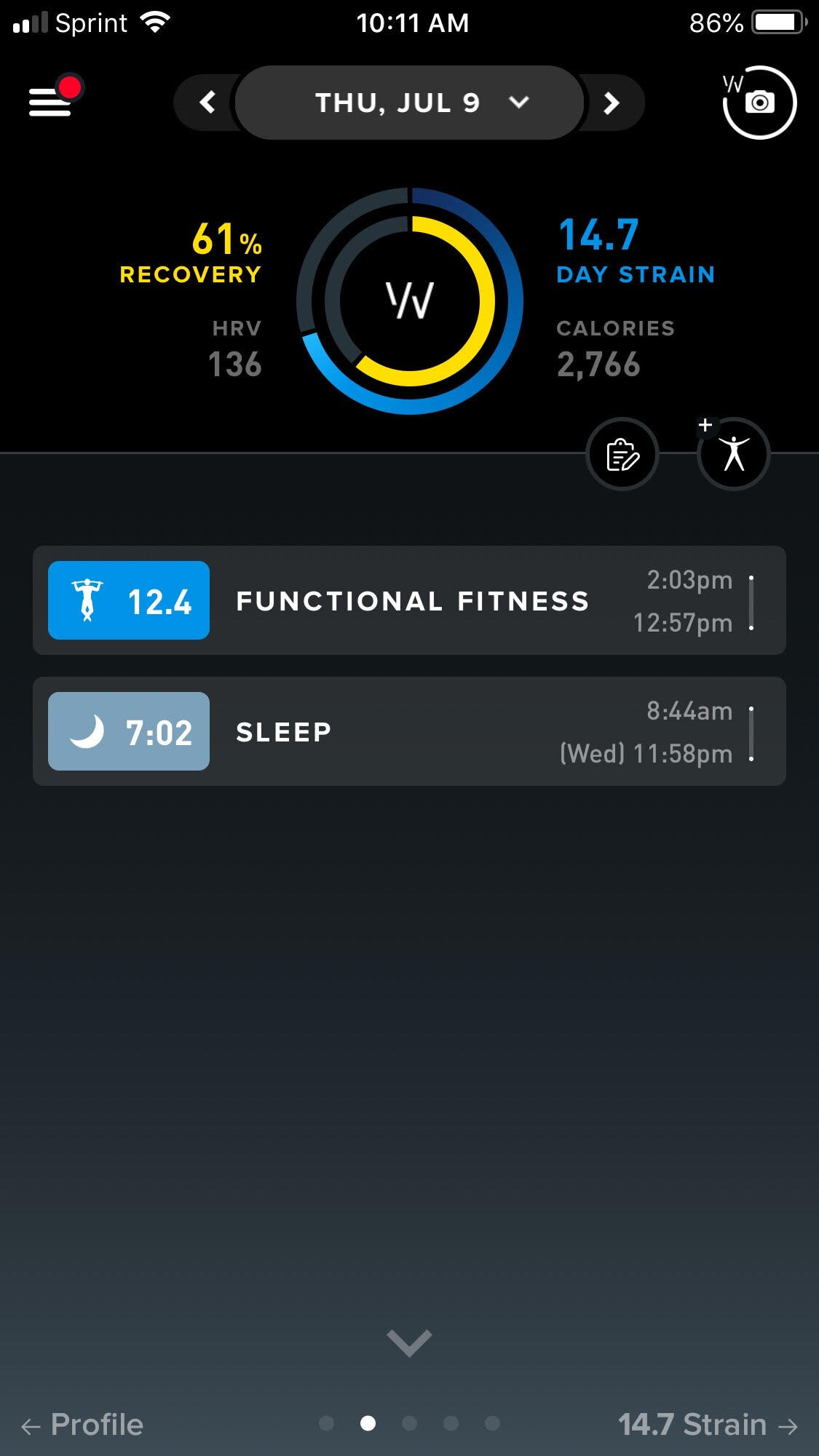
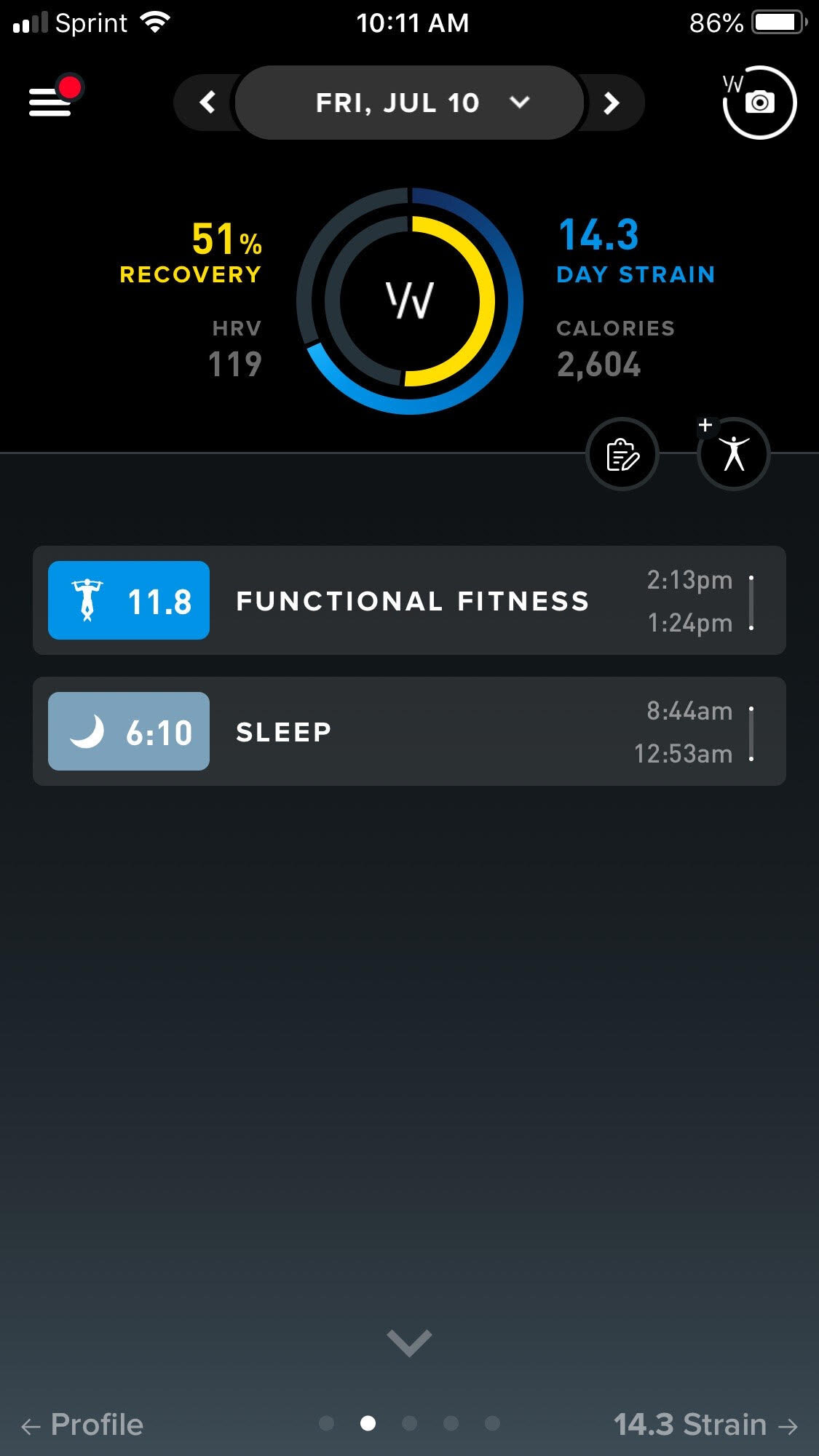
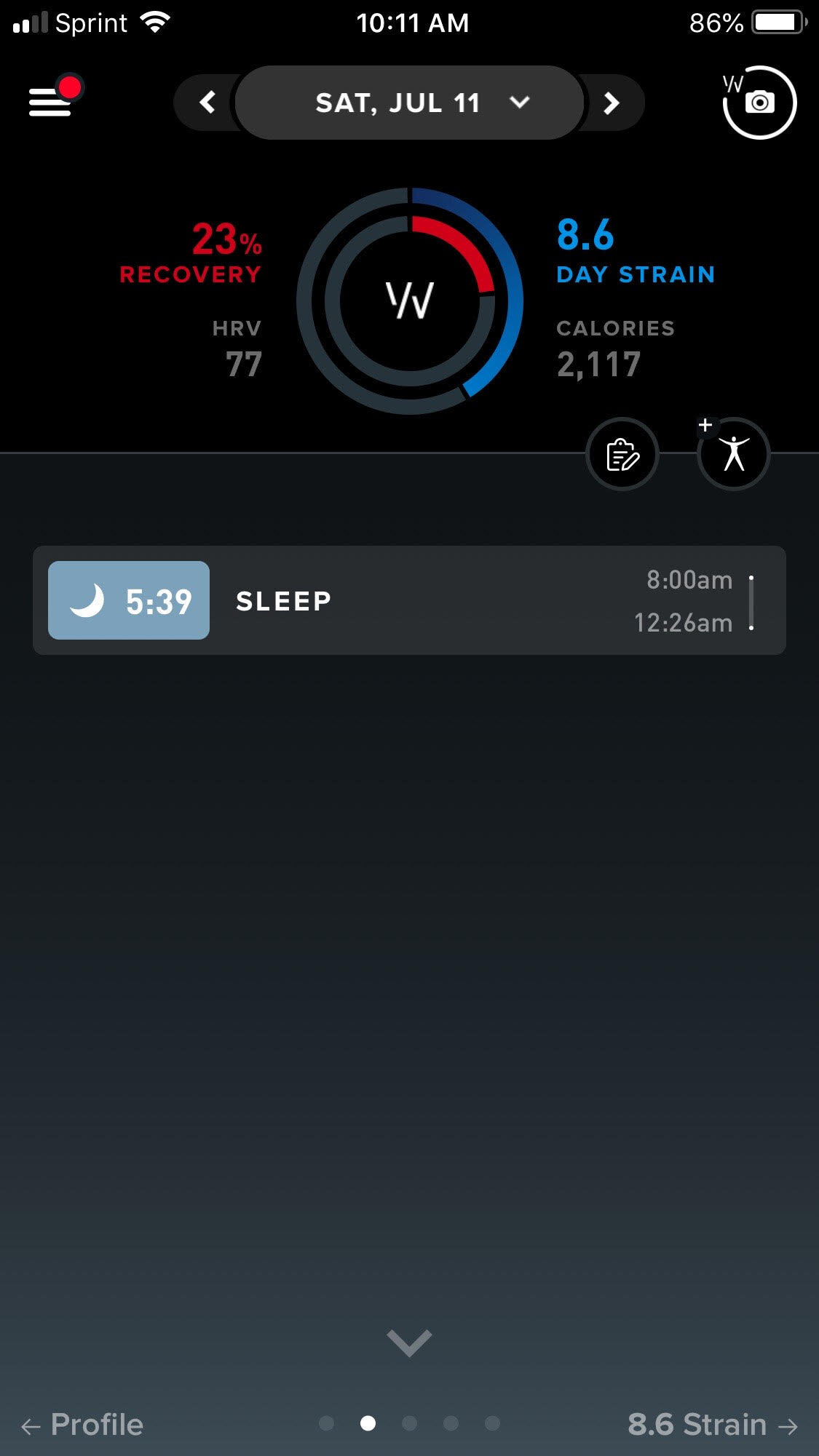
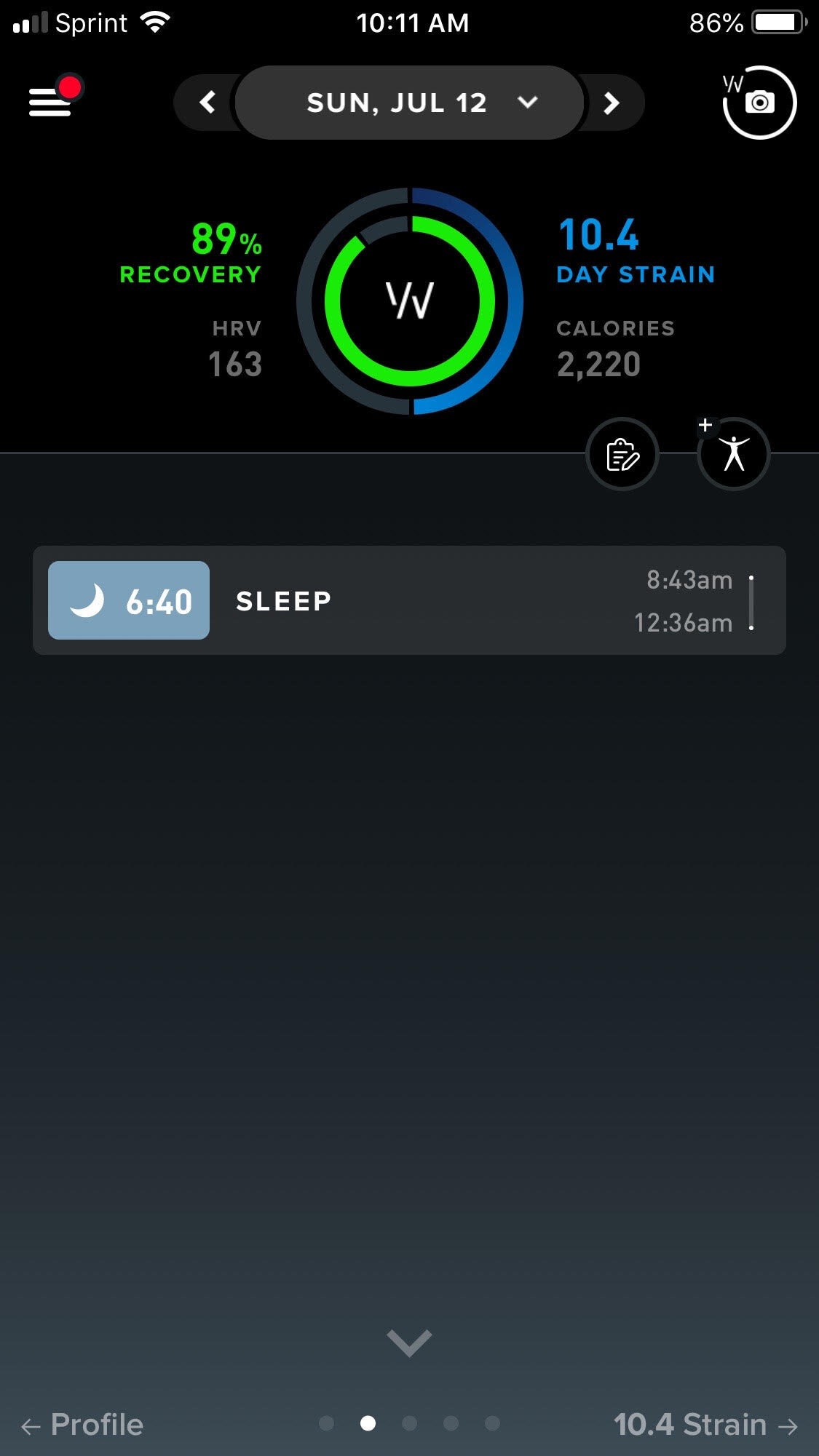
The next 6 slides show recovery and heart rate during the float, as well as heart rate during sleep that evening.
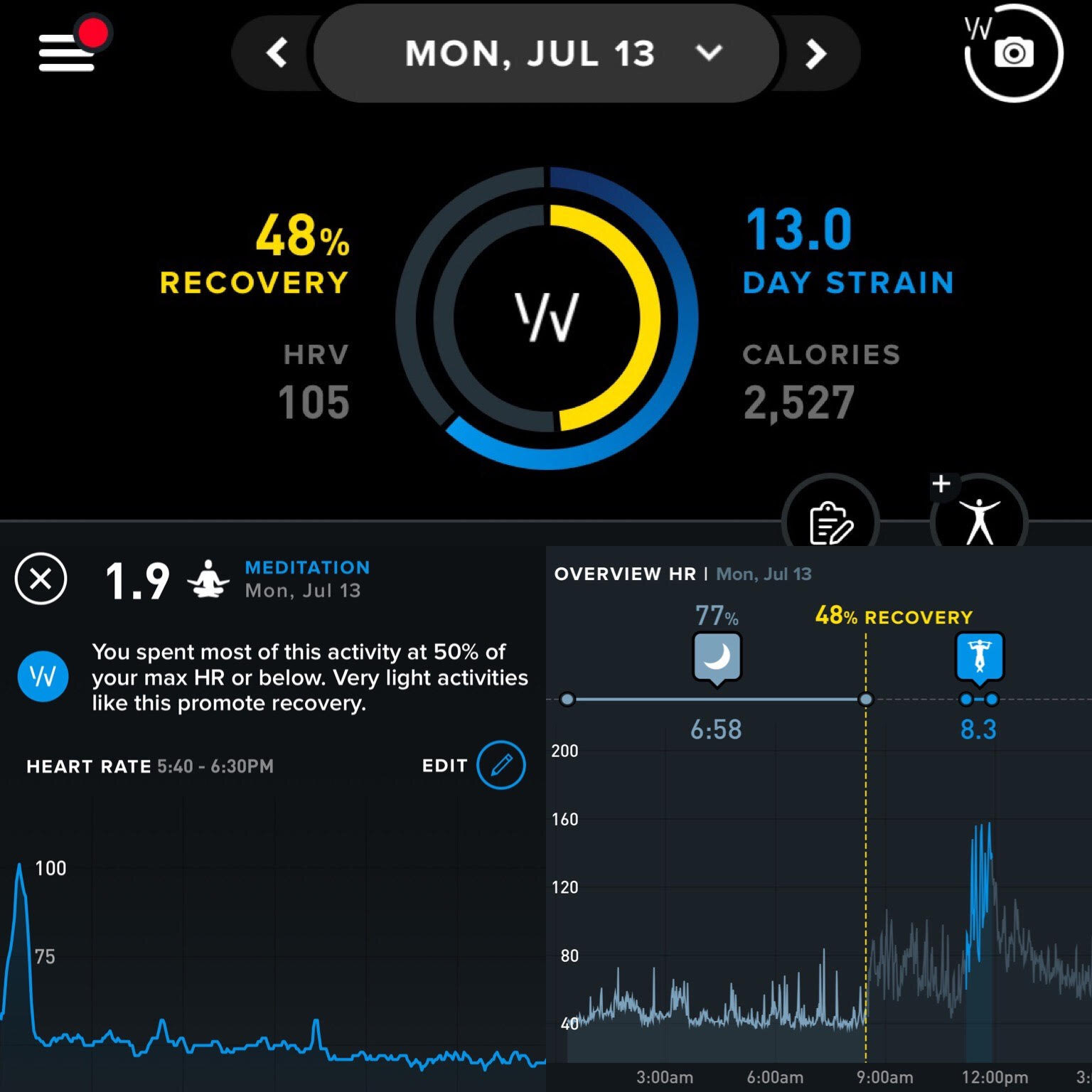
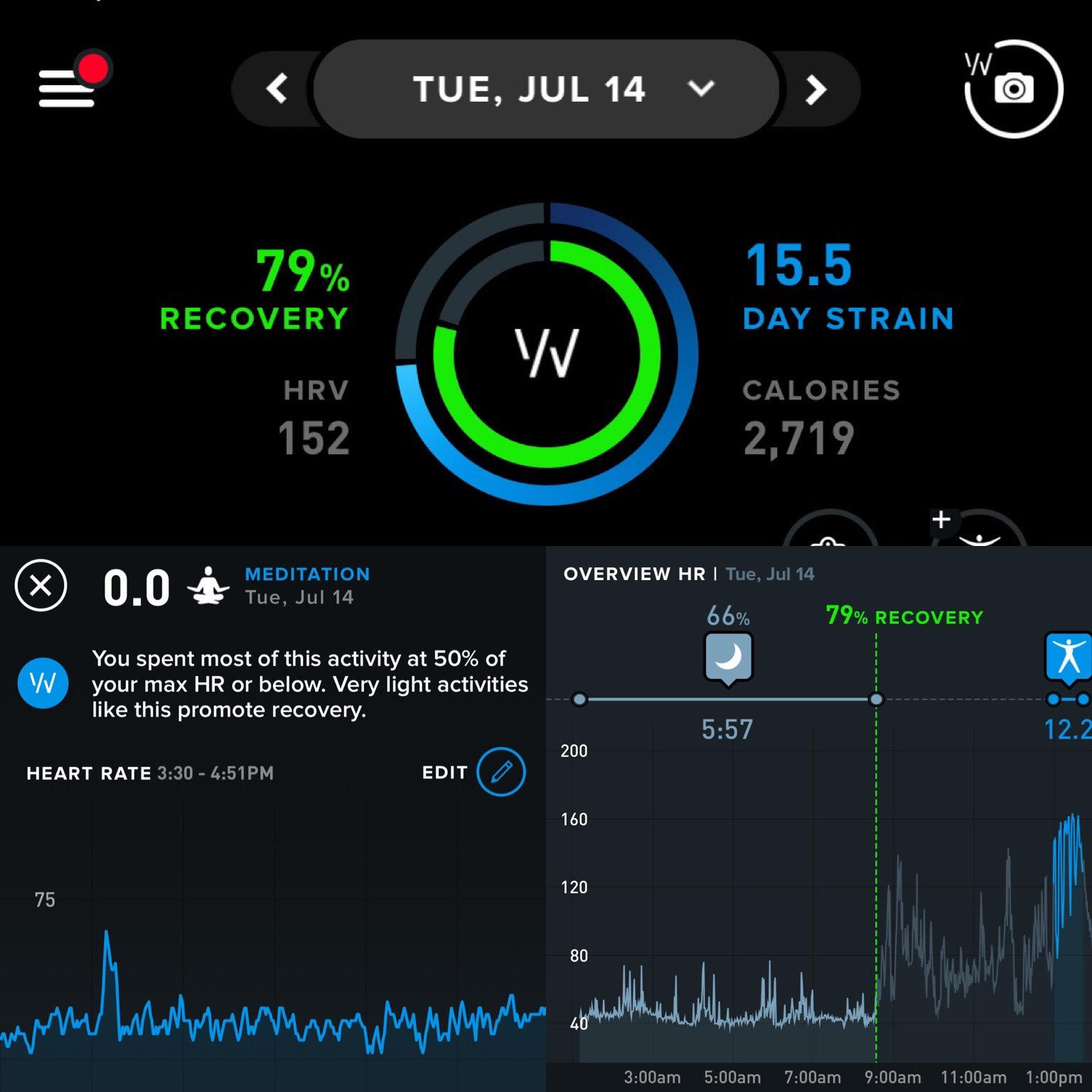
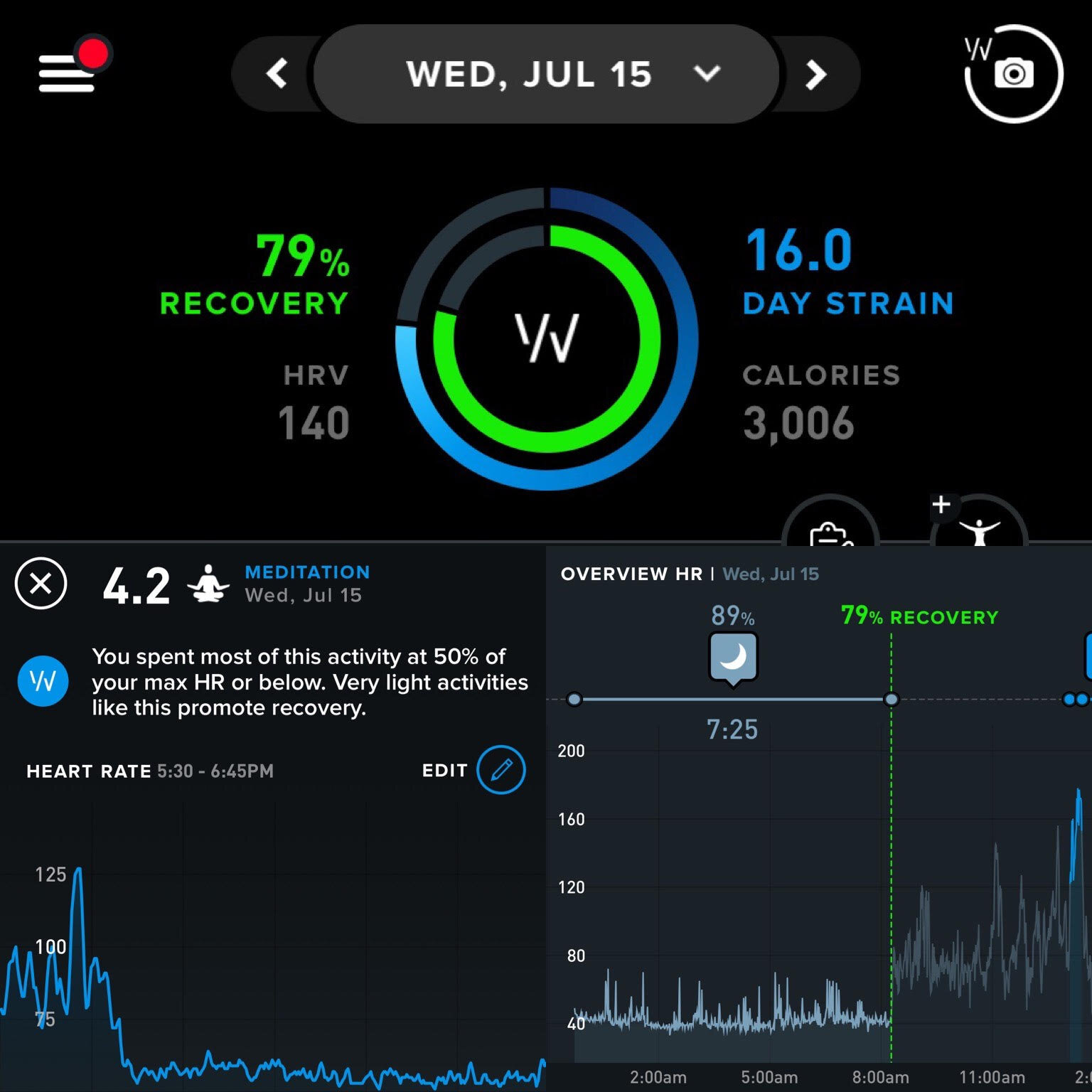
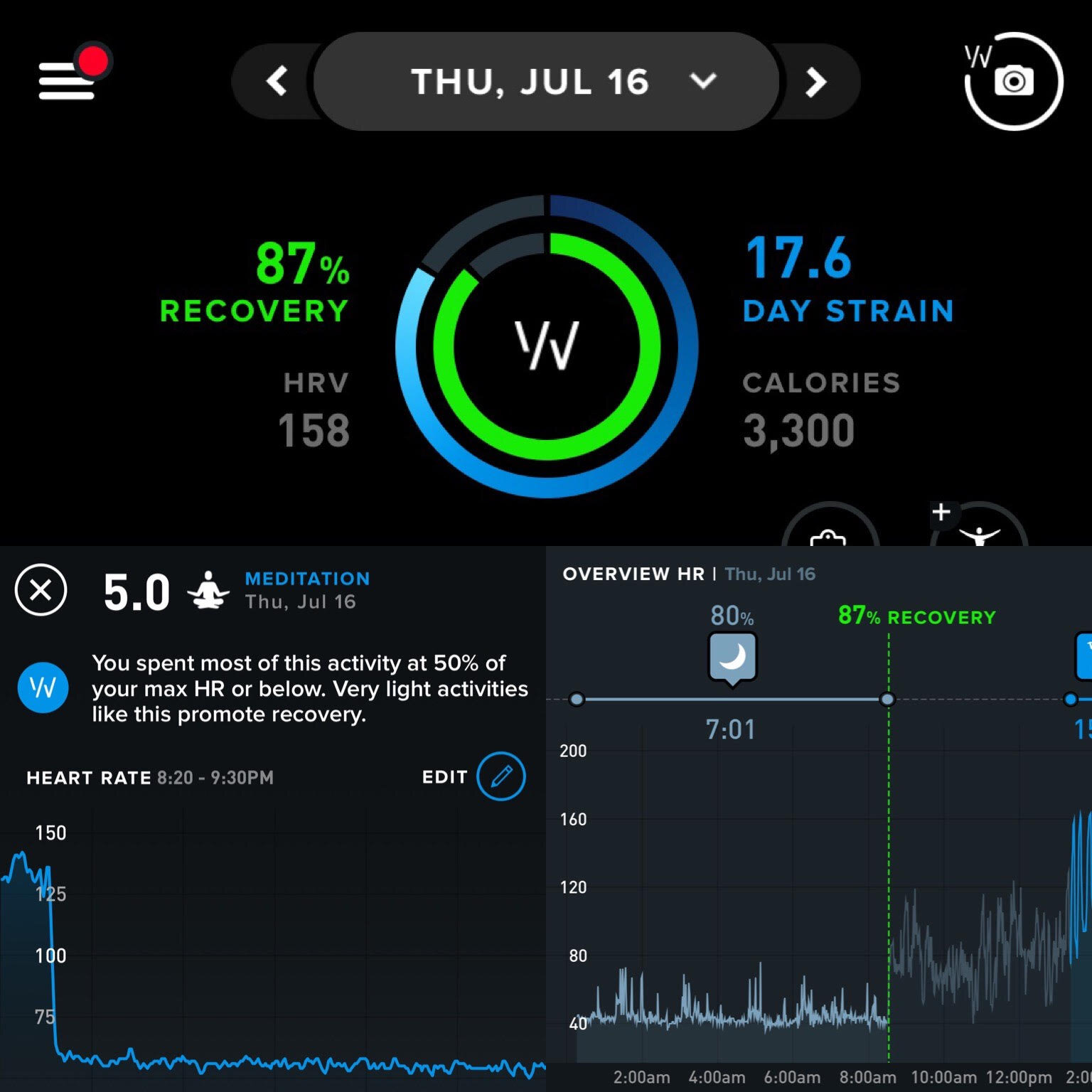
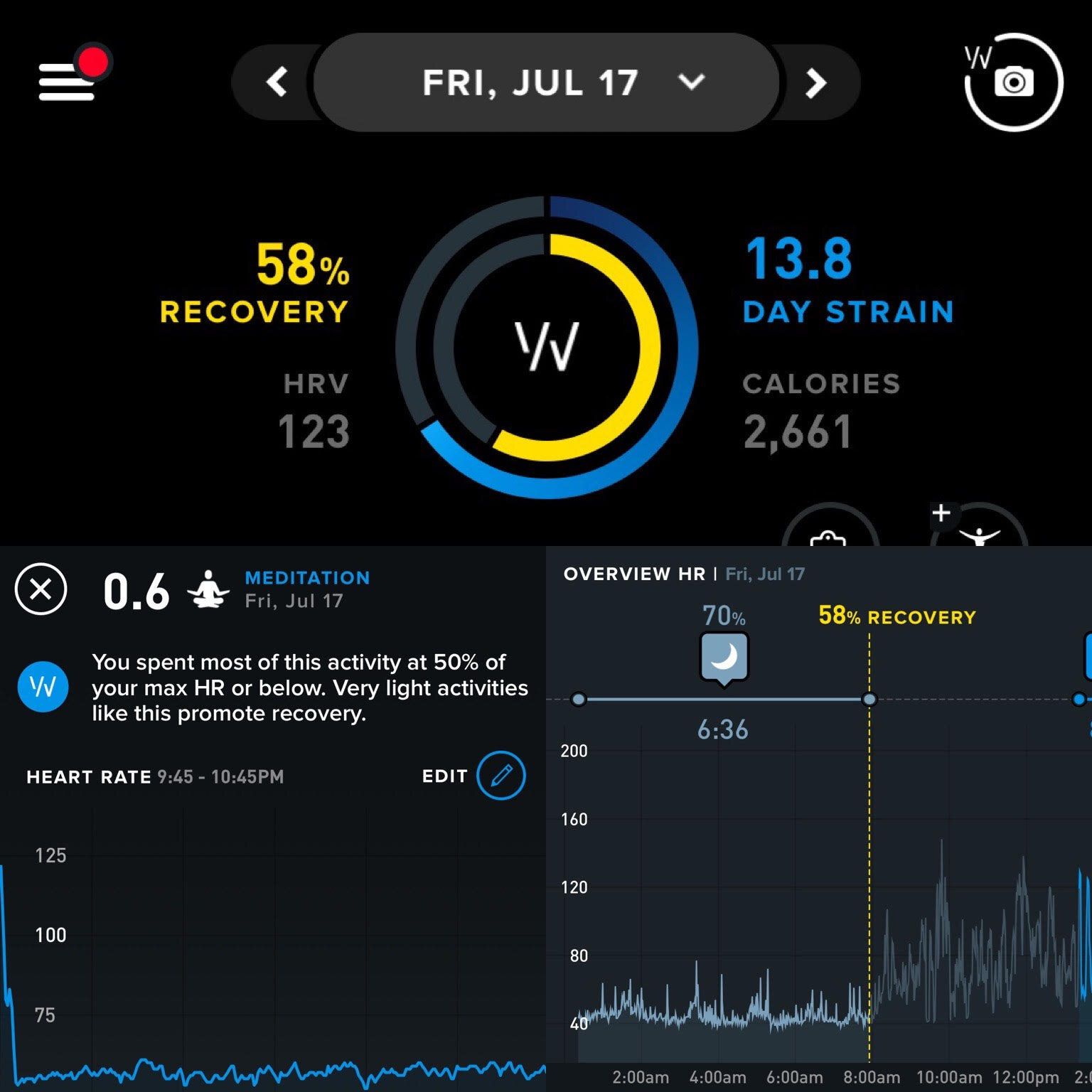
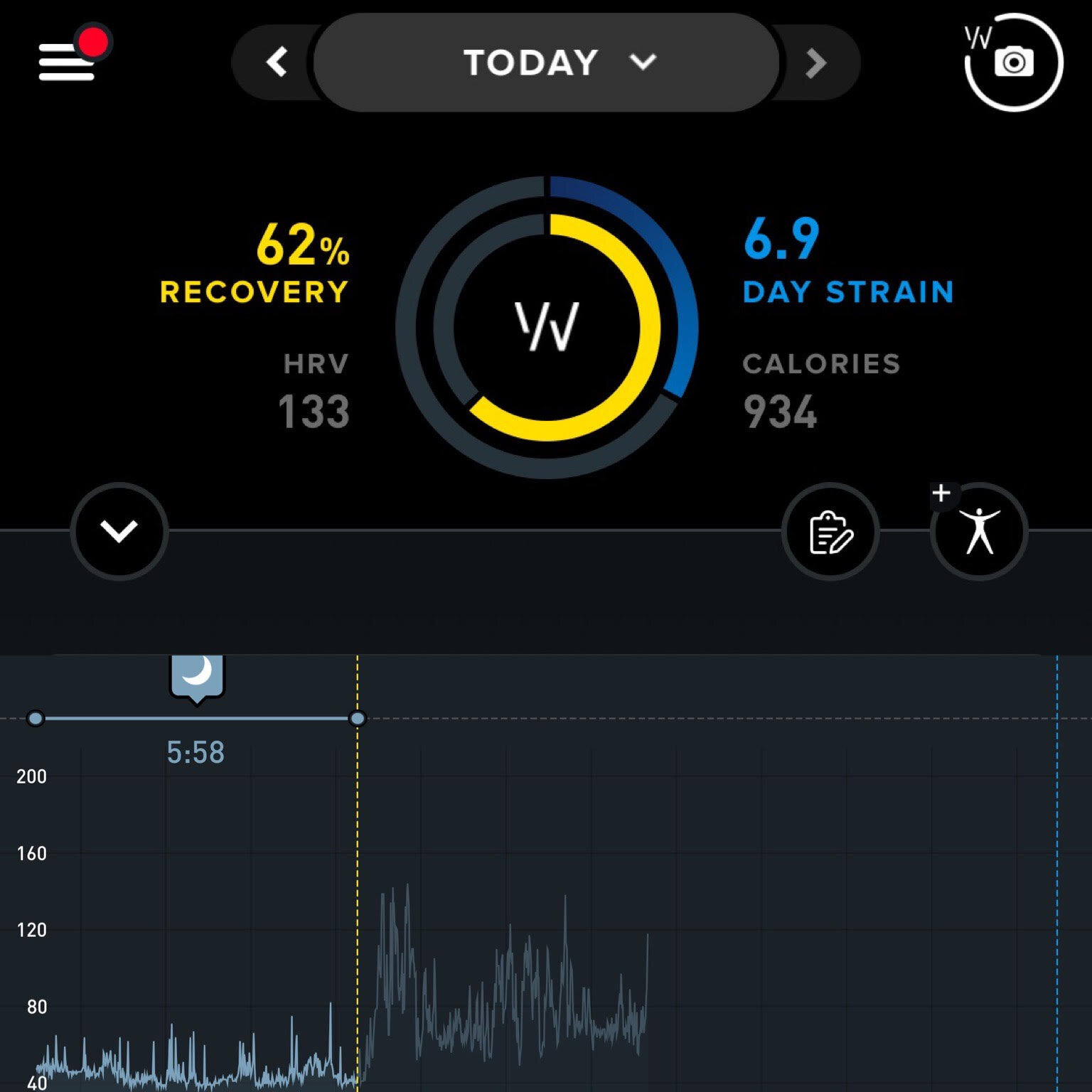
We’ll mostly focus on the correlation between heart rate variability (HRV) and recovery here. Now, heart rate variability is “simply a measure of the variation in time between each heartbeat. This variation is controlled by a primitive part of the nervous system called the autonomic nervous system (ANS). It works regardless of our desire and regulates, among other things, our heart rate, blood pressure, breathing, and digestion. The ANS is subdivided into two large components, the sympathetic and the parasympathetic nervous system, also known as the fight-or-flight mechanism and the relaxation response.” (https://www.health.harvard.edu/blog/heart-rate-variability-new-way-track-well-2017112212789)
Basically, the higher the HRV, the better recovery. Now during a float, the environment greatly reduces the demand on the ANS. Heart beat naturally slows down as the body has no demands placed on it, blood pressure reduces with the removal of external stress, and breathing gets into a steady rhythm. Looking at the slides above, it becomes apparent that HRV and recovery go hand in hand. Here’s a short breakdown of the data:
Non float day averages: Float day averages:
HRV - 120 HRV - 141.4
Recovery - 55.9% Recovery - 73%
Sleep quality - 70% Sleep quality - 74.2%
Sleep length - 6:29 Sleep length - 6:57
Strain - 12.58 Strain - 15.8
Low/high for non float days: Low/high for float days:
HRV - 77/163 HRV - 123/159
Recovery - 23/89% Recovery - 58/87%
Sleep quality - 60/74% Sleep quality - 66/89%
Sleep length - 5:39/7:02 Sleep length - 5:57/7:25
Strain - 8.6/14.7 Strain - 13/17.6
To break that down a little more, over the 5 days we saw:
HRV increase of 21.4
Recovery increase of 17.1%
Sleep quality increase of 4.2%
Sleep length increase of 28 minutes
Strain increase of 3.22
Now here’s where it gets really interesting. With only 30 minutes total more sleep over the course of the 5 float days (a measly average of 6 minutes per night!), there was a substantial increase in quality and recovery. And that’s taking into account more strain that the body was able to take through exercise. There were a few unforeseen variables, like noisy neighbors and my 4-year-old crawling into my bed that disturbed the sleep a little, but that’s life.
We all have stress in our lives, and there are many ways of dealing with it. Whether it be emotional, physical or both, we can’t just ignore it and hope it goes away. One of the greatest aspects of floating is that it’s completely noninvasive, and there are no harmful side effects. Essentially, it’s nothing at all. Just you, by yourself, having an opportunity to remove all the external stressors that make life less enjoyable. Aside from the benefits of reducing stress, regular floats are tremendous for sleep quality, which of course is critical for immune system, mood, and just keeping your body and mind working at its best.